Institute News · For Immediate Release
Russ W. Rosenzweig Named Executive Director of The Venture Capital Institute
Chicago · Effective March 13, 2026
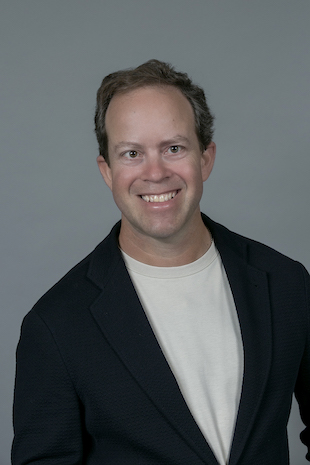
The Venture Capital Institute today announced that Russ W. Rosenzweig has been appointed its first Executive Director, effective March 13, 2026.
Mr. Rosenzweig brings more than thirty years of experience on every side of the venture table: as a founder who raised it, an operator who grew through it, an adviser who helped others win it, and a teacher who trained the next generation to think clearly about it.
His first experience with venture capital came while he was still an undergraduate at Northwestern University, when he served as one of the youngest-ever venture capital interns, working for Andy Kalnow at Alpha Capital Venture Partners in Chicago. At 22 he raised capital for his first startup, Round Table Group, which he co-founded in 1994 as the first expert witness search and referral firm. Round Table Group was acquired by Thomson Reuters in 2010; Mr. Rosenzweig re-acquired the company several years later and continues to lead it today. The firm has been the subject of three Stanford University business case studies.
During the dot-com era, Mr. Rosenzweig completed his M.B.A. at the University of Chicago Booth School of Business on the entrepreneurship, venture capital and finance track. With one of his teachers there, Professor Steven Kaplan, he formed Michigan & Oak Partners, a venture capital advisory firm that helped numerous startups of that era secure venture funding. He later joined the teaching side himself, leading and directing the New Entrepreneurs' Program at the University of Chicago and the Business Frameworks course at the IIT Institute of Design.
Mr. Rosenzweig holds a B.A. in Economics and Mathematical Methods in the Social Sciences from Northwestern University and an M.B.A. in Economics and Finance from the University of Chicago Booth School of Business, having studied under seven Nobel laureates between the two institutions. He has been helping promising startups achieve success and venture funding for over thirty years, and says he is honored to be appointed Executive Director of the Institute.
Executive Director Russ Rosenzweig on why the Institute exists, the three findings the concierge gives, and why she is named Shawna (9 minutes).
Read the full transcript
Lightly edited for readability.
My name is Russ Rosenzweig, and I'm the Executive Director of the Venture Capital Institute. Our website, by the way, is theventurecapitalinstitute.com, not venturecapitalinstitute.com, which was unattainable, too expensive. I'm so excited to be back in the realm of venture capital, helping entrepreneurs assess whether their startup is VC-able and helping them achieve their venture capital goals.
I know a little bit about this world because I've been in it since I was 22. I launched my first startup when I was still in college. It was one of the first expert networks, called Round Table Group, which connected professors and other experts with expert witness engagements for law firms and also consulting engagements. It's 32 years later and I'm still doing it. We had an exit and a buyback and all kinds of adventures along the way. I even recently wrote the book about our entrepreneurial exploits in the wild world of expert witness referrals.
The reason I got so excited about the VC world was that our massive growth as an expert network started in the dot-com era. It was 1997, and I had just been, by some miracle, admitted to business school at the University of Chicago. Having already been connecting professors with expert witness engagements, I had an idea during the dot-com boom that we'd team up with a subset of the professors I had come to know, some of my teachers, who were the ones focused on venture capital and on dot-com businesses. It was such a cool honor, when I was barely 24 years old, to be teaming up with all these famous profs, helping entrepreneurs answer two questions: is your venture fundable? And if it is, which venture capitalists actually fit it?
And boy, what a learning experience the dot-com era was. From 1997 until March of 2000, I worked on dozens and dozens of promising startups along with these professors, and learned which ones are VC-able, which ones aren't, and which ones are but need help along the way. Over the years, I've been doing this work on pretty much every side of the table. I've raised venture capital. I've been turned down for it. I've advised founders who got it. And I have taught the subject at the University of Chicago, in a program called the New Entrepreneurs' Program that lasted over a decade.
Here's what I have watched happen over and over in the course of three decades in the world of entrepreneurship, being a leader of the Entrepreneurs' Organization, being in YPO, and continuing to work with professors and founders and VCs and promising entrepreneurs. There are so many founders now, in the AI era, with incredibly promising businesses. It reminds me again of the dot-com world. But boy, AI is even more magnificent, in my opinion. It's even more consequential than the dot-com era. So this is quite a nice era for new entrepreneurs to start businesses.
What typically happens to a founder with a genuinely good business is this. You can lose a year or two chasing venture capital that you are never going to get, because nobody would ever tell you the truth early enough. Investors do not say no very clearly. I don't know why. It was the same in the 90s as it is now: it's very hard to get a no from a venture capitalist. It's also very hard to get a yes. So that's the challenge. Investors just aren't clear. So you typically find some advisors, but advisors are typically paid to be encouraging. So the founder learns the answer the expensive way, and it takes a lot of time to finally get to a yes or a no.
A part of me hates raising capital, because it's so time consuming and it takes away from the startup work itself. It's very time consuming and energy intensive to raise capital. So you've got to know, in my opinion, whether the thing is even VC-able, and there are many, many options. Most of the businesses I've started have been very successful but were never VC-able in the first place.
That's why this institute exists. It's very simple and focused: to give you that answer. The moment you engage with us, our one and only mission is to tell you whether your venture is VC-able and, if it's not, what your other options for funding are. It'll also tell you if it's not yet VC-able and might just need a bit of work. And that's what the Institute can help you with.
So talk to our AI concierge. I've named it Shawna. Shawna is going to interview you the way an investment committee at a VC would, in what I think is a very enjoyable and thoughtful conversation. She's far better than any generic chatbot and has thousands of articles and interviews and conversations with VCs. This AI concierge really does know how a venture capitalist thinks about a venture. And she'll tell you one of three things. She'll tell you that you are fundable now, and may that be the case; she'll even tell you which VC firms are the best and most suitable for you to approach. The second thing she might tell you is that it's fixable, and she'll express to you exactly what needs to happen to get to the point where you can present to a VC. Or she'll tell you that this is a fine business and venture capital is just the wrong money for it, which has been most of the businesses that I've started. That last answer is the most common one, and it's not an insult. Most great companies are not VC-able.
The cool part about this AI concierge: there are no gimmicks. It's free. It's really brilliant and humorous, and it will engage with you at a very deep level, far better than any generic AI chatbot. All you have to do is engage with the AI concierge and tell it what you're building.
One more thing, to conclude. I named it Shawna after an actual person I knew so well, Shawna Snukst, who came up with this idea of the Institute years ago and was one of those early Chicago thought leaders I described, who set up this whole idea of helping entrepreneurs get funded. She died in 2023, and this was really the work she loved doing most in life: helping entrepreneurs assess the VC-ability of their venture and helping them actually get the funding. So it just seemed right that she should go on doing it.
Welcome to the Venture Capital Institute. I hope you enjoy your time with us.
The appointment takes effect on March 13: the birthday of the Institute's late co-founder, Shawna Snukst, in whose honor the date was chosen.
The Venture Capital Institute is an independent institution that gives founders a candid answer to the question the market answers expensively: is this venture fundable? Its concierge interviews founders the way an investment committee would and renders one of three findings, free, with reasons. The Institute documents fifty venture firms and fifteen accelerator programmes from their own published criteria, and maintains a research library verified against the published papers. Every fee the Institute charges is flat, never contingent on a financing. Learn more at theventurecapitalinstitute.com.
Inquiries: use the engagement request form on the home page.